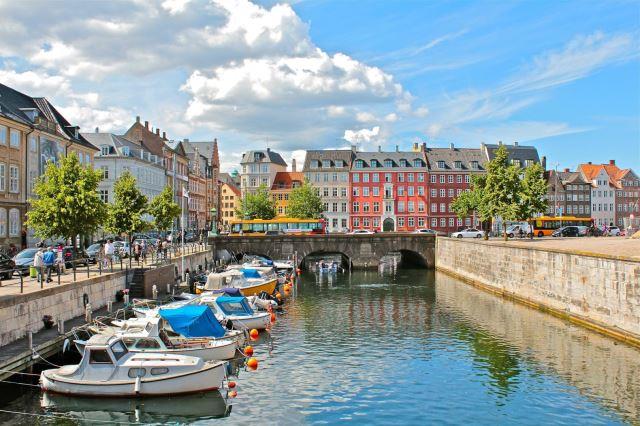
Sjælland (Zealand): The Heart of Denmark

rec-dev.com – Sjælland, or Zealand, is the largest and most populous island of Denmark. It’s home to the nation’s capital, Copenhagen, and many other charming towns and villages. With its diverse landscapes, rich history, and vibrant culture, Sjælland offers a unique and unforgettable experience.

Copenhagen: The Crown Jewel of Denmark

Copenhagen, the capital of Denmark, is a city that seamlessly blends old-world charm with modern sophistication. Its picturesque canals, historic buildings, and vibrant neighborhoods create an unforgettable atmosphere.

  • Nyhavn: This colorful harbor is a popular tourist destination, lined with brightly painted 17th-century townhouses and bustling with boats and cafes.
  • Amalienborg Palace: The winter residence of the Danish royal family, this elegant palace complex is a sight to behold.
  • Tivoli Gardens: One of the world’s oldest amusement parks, Tivoli offers thrilling rides, beautiful gardens, and enchanting entertainment.
  • Rosenborg Castle: This Renaissance castle houses the Danish Crown Jewels and offers a glimpse into the history of the Danish monarchy.

Beyond Copenhagen: Exploring Sjælland

While Copenhagen is undoubtedly the star attraction, Sjælland has much more to offer. The island is home to several charming towns and villages, each with its own unique character.

  • Roskilde: A historic city with a beautiful cathedral and Viking Ship Museum.
  • Helsingør: Known for its historic Kronborg Castle, the inspiration for Shakespeare’s “Hamlet.”
  • Næstved: A picturesque town with a medieval castle and charming streets.
  • Køge: A coastal town with a beautiful harbor and a historic center.

A Natural Paradise

Sjælland offers a diverse range of natural landscapes, from stunning beaches to lush forests.

  • North Zealand: Known for its beautiful beaches, charming coastal towns, and historic castles.
  • South Zealand: A region of rolling hills, picturesque villages, and historic manor houses.

A Cultural Tapestry

Sjælland is a cultural hub, with a rich history, vibrant arts scene, and world-class museums.

  • Louisiana Museum of Modern Art: This world-renowned museum is housed in a stunning building overlooking the Øresund Sound.
  • National Museum of Denmark: This museum offers a comprehensive overview of Danish history, from the Stone Age to the present day.
  • Danish Design Center: This center showcases the best of Danish design, from furniture and fashion to architecture and ceramics.

Sjælland is a region that offers a perfect blend of history, culture, and natural beauty. Whether you’re exploring the bustling streets of Copenhagen or the tranquil countryside, you’re sure to be enchanted by the charm and diversity of this beautiful island.

To Live: A Heartfelt Journey Through China’s Turbulent History

rec-dev.com – “To Live,” directed by Zhang Yimou, is a poignant exploration of resilience and survival amidst the sweeping changes in 20th-century China. Released in 1994, this film adapts Yu Hua’s novel of the same name, offering a narrative that is both intimate and epic. It captures the essence of human endurance against the backdrop of historical upheavals, drawing viewers into a deeply moving cinematic experience.

Introduction: A Cinematic Chronicle of Change

“To Live” stands as a significant work in Zhang Yimou’s oeuvre, marking a departure from his earlier, more visually extravagant films. Here, Zhang offers a more subdued yet powerful portrayal of ordinary lives caught in the tides of history. The film’s narrative spans several decades, tracing the fortunes of one family as they navigate the vicissitudes brought on by war, political movements, and social transformations.

Plot Summary: A Family’s Struggle and Survival

The story follows Xu Fugui (played by Ge You) and his wife Jiazhen (played by Gong Li) as they endure the tumultuous changes in China from the 1940s to the 1970s. Initially a wealthy landowner, Fugui loses everything due to his gambling addiction, forcing his family into a life of poverty. As the film progresses, they witness and endure the profound impacts of the Chinese Civil War, the Great Leap Forward, and the Cultural Revolution. Despite the hardships, Fugui and Jiazhen’s journey is one of perseverance and adaptation, with their love and family bonds providing solace amid the chaos.

Themes: Resilience and the Human Spirit

“To Live” delves into themes of resilience and the human spirit, portraying how individuals cope with life’s adversities. The film underscores the importance of family, love, and hope, even in the bleakest circumstances. By focusing on the personal rather than the political, Zhang Yimou crafts a narrative that is universally relatable, highlighting the enduring strength of ordinary people in the face of extraordinary challenges.

Cinematic Achievements: A Masterpiece of Subtlety and Emotion

Zhang Yimou’s direction in “To Live” is characterized by its subtlety and emotional depth. The film eschews the grand visual style of his earlier works, opting instead for a more restrained approach that emphasizes character development and storytelling. The performances by Ge You and Gong Li are particularly noteworthy, bringing authenticity and nuance to their roles. The film’s cinematography captures the changing landscapes of China, providing a visual backdrop that complements the narrative’s emotional journey.

Legacy and Impact: A Touchstone of Chinese Cinema

“To Live” received critical acclaim both domestically and internationally, earning the Grand Jury Prize at the Cannes Film Festival and other prestigious awards. The film’s exploration of personal and historical themes resonated with audiences around the world, contributing to a greater understanding and appreciation of Chinese cinema. Despite its initial ban in China due to its critical portrayal of historical events, “To Live” has since become a touchstone for filmmakers and cinephiles alike, celebrated for its courage and artistic integrity.

Conclusion: A Timeless Narrative of Human Endurance

Decades after its release, “To Live” remains a timeless narrative of human endurance, offering insights into both personal and historical dimensions of life. Zhang Yimou’s masterful storytelling and the film’s compelling performances continue to captivate audiences, serving as a powerful reminder of the enduring strength of the human spirit. As a cinematic exploration of life’s challenges and triumphs, “To Live” stands as a testament to the resilience and hope that define the human experience.

Jaboatão dos Guararapes: A City of History & Natural Beauty

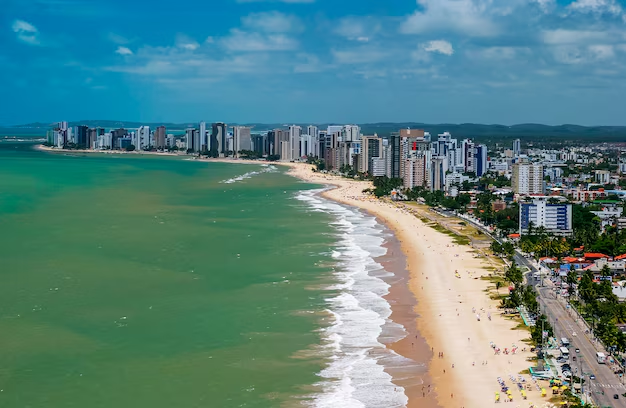
rec-dev.com – Jaboatão dos Guararapes is a city located in the state of Pernambuco, Brazil. Known for its historical significance and stunning natural landscapes, it is a city that offers a unique blend of cultural heritage and scenic beauty. With a population of over 700,000 people, Jaboatão dos Guararapes is one of the most populous cities in the state and plays an important role in the region’s development.

Historical Significance

Jaboatão dos Guararapes holds a special place in Brazilian history as the site of the Battles of Guararapes. These battles, fought in the 17th century, were pivotal in the struggle for Brazilian independence from Dutch rule. The victory of Portuguese and Brazilian forces is celebrated as a symbol of national unity, and the city is often regarded as the birthplace of the Brazilian Army.

Economic Overview

The economy of Jaboatão dos Guararapes is diverse, with a mix of industrial, commercial, and agricultural activities. The city is part of the Recife Metropolitan Area, benefiting from its proximity to the state capital. Key industries include food processing, textiles, and logistics, with a growing emphasis on technology and innovation. The city’s strategic location and infrastructure support its economic growth and development.

Cultural Attractions

Jaboatão dos Guararapes offers a rich array of cultural attractions. The city hosts various festivals and events throughout the year, celebrating its cultural diversity and historical legacy. Museums and cultural centers provide insights into the city’s past and present, while local crafts and cuisine offer a taste of its vibrant culture. The annual Festa da Pitomba is a highlight, attracting visitors with its lively music, dance, and culinary delights.

Natural Beauty

The natural beauty of Jaboatão dos Guararapes is one of its most appealing features. The city is home to beautiful beaches, lush parks, and nature reserves. Piedade Beach and Candeias Beach are popular destinations for both locals and tourists, offering pristine sands and clear waters. The Guararapes National Historical Park, with its rich biodiversity, provides opportunities for hiking and exploring the region’s unique flora and fauna.

Education and Infrastructure

Jaboatão dos Guararapes is well-equipped with educational institutions ranging from primary schools to higher education facilities. The city’s infrastructure supports its growing population, with modern transportation systems and public services. Efforts to improve urban development and sustainability are ongoing, ensuring a high quality of life for its residents.

Conclusion

Jaboatão dos Guararapes is a city that beautifully intertwines history, culture, and natural splendor. With its historical landmarks, economic vitality, and breathtaking landscapes, it offers a rich and rewarding experience for those who visit or call it home. Whether exploring its historical sites or enjoying its natural beauty, Jaboatão dos Guararapes stands as a testament to the enduring spirit of Brazil.

Burkina Faso’s Political Landscape: Coups and Governments

rec-dev.com – Burkina Faso, formerly known as Upper Volta, has a political history marked by a series of coups, military interventions, and transitions to civilian rule. Since gaining independence from France in 1960, the country has experienced numerous changes in leadership, reflecting the complex dynamics of its political landscape.

The Early Years of Independence

The early years of Burkina Faso’s independence were characterized by political instability. The first president, Maurice Yamogo, was overthrown in 1966, leading to a period of military rule under Colonel Sangoulé Lamizana. Lamizana’s regime lasted until 1980 when he was ousted by a military coup led by Major Dr. Jean-Baptiste Ouédraogo.

The Rise and Fall of Thomas Sankara

One of the most significant figures in Burkina Faso’s political history is Thomas Sankara, who came to power in 1983. Sankara, a charismatic leader and revolutionary, initiated a series of ambitious social and economic reforms aimed at improving the lives of the Burkinabé people. His government, known for its anti-imperialist and pan-Africanist stance, renamed the country Burkina Faso, meaning “Land of Incorruptible People.”

However, Sankara’s radical policies and authoritarian style led to tensions both within his government and with foreign powers. In 1987, he was assassinated in a coup led by his former ally, Blaise Compaoré.

The Long Rule of Blaise Compaoré

Blaise Compaoré took control of the government following Sankara’s assassination and would go on to rule Burkina Faso for nearly three decades. Initially, Compaoré’s government continued many of Sankara’s policies, but over time, he adopted a more pro-Western stance and implemented economic liberalization measures.

Compaoré’s rule was not without controversy. He faced criticism for his authoritarian tendencies and the lack of political freedom in the country. In 2014, widespread protests erupted after he attempted to change the constitution to extend his presidency. The protests led to his ouster in a popular uprising, marking the end of his long tenure.

Transition to Democratic Rule

Following Compaoré’s departure, Burkina Faso embarked on a transition to democratic rule. Interim governments were established to oversee the transition, and in 2015, Roch Marc Christian Kaboré was elected as the new president in a peaceful and democratic election.

Kaboré’s government has faced significant challenges, including security threats from extremist groups and ethnic tensions. Despite these challenges, Burkina Faso has made strides in consolidating democratic governance and improving its political stability.

Conclusion

Burkina Faso’s political landscape is a testament to the country’s resilience and the determination of its people to achieve stable and democratic governance. The history of coups and governments reflects the complexities of Burkinabé politics and the ongoing struggle to build a peaceful and prosperous nation. As Burkina Faso continues to navigate its political journey, the lessons of its past will undoubtedly shape its future.

Tales of Lustre and Legacy: Diamonds in History

rec-dev.com – Diamonds, with their unparalleled brilliance and eternal allure, have been a source of fascination and desire for millennia. These precious stones, formed deep within the Earth under extreme pressure and heat, have been intertwined with human history, culture, and mythology for ages. From ancient civilizations to modern times, diamonds have symbolized power, wealth, and eternal love, leaving a legacy that continues to captivate the world.

Ancient Origins: The Early Allure of Diamonds

The history of diamonds dates back to ancient times, with the first recorded mention in Sanskrit texts from India around 4th century BC. The Indian subcontinent was the sole source of diamonds until the 18th century, and these gems were considered powerful talismans, believed to bring strength, courage, and invincibility to their bearers. Diamonds were also thought to possess healing properties and were used in religious ceremonies.

The Spread of Diamond Lustre: Trade and Exploration

As the allure of diamonds spread, so did their trade. Merchants from various parts of the world, including the Middle East and Europe, sought these precious stones, leading to the establishment of trade routes that spanned continents. The discovery of diamond deposits in Brazil in the 18th century marked the beginning of a new era in the diamond trade, making diamonds more accessible to the European market.

The Diamond Rush: The 19th Century and Beyond

The 19th century was a turning point in the history of diamonds, with the discovery of vast diamond deposits in South Africa. This led to a diamond rush, transforming the diamond industry and making diamonds more affordable and available to the masses. The establishment of De Beers Consolidated Mines Limited in 1888 further consolidated the diamond trade, controlling the flow of diamonds and setting the stage for the modern diamond market.

Symbols of Love and Power: Diamonds in Culture and Society

Throughout history, diamonds have been symbols of love, commitment, and power. The tradition of giving a diamond engagement ring dates back to the 15th century, when Archduke Maximilian of Austria proposed to Mary of Burgundy with a diamond ring. Since then, diamonds have been synonymous with eternal love and commitment.

Diamonds have also been associated with royalty and the elite, adorning crowns, scepters, and other regalia. The British Crown Jewels, which include some of the most famous diamonds in the world such as the Cullinan Diamond, are a testament to the enduring association between diamonds and power.

The Legacy of Diamonds: From Conflict to Conscious

The 20th and 21st centuries have seen significant changes in the diamond industry, with the emergence of conflict diamonds, also known as “blood diamonds,” leading to a global movement for ethical sourcing. The Kimberley Process Certification Scheme was established in 2003 to prevent conflict diamonds from entering the legitimate market, marking a shift towards more responsible diamond trading.

Today, the legacy of diamonds continues to evolve, with a growing emphasis on sustainability, ethical sourcing, and transparency. Lab-grown diamonds and diamond alternatives are gaining popularity, offering consumers a more environmentally friendly and conflict-free choice.

Conclusion: The Enduring Allure of Diamonds

From ancient talismans to symbols of love and power, diamonds have left an indelible mark on human history. Their enduring allure, combined with their physical properties of brilliance and durability, ensures that diamonds will continue to captivate and inspire for generations to come. As the diamond industry evolves, the legacy of these precious stones will undoubtedly continue to shine, reflecting the changing values and aspirations of society.

History of America: the colony to the 21st century

The history of the United States is a rich tapestry woven from the threads of diverse cultures, ideologies, and events. From the early colonial settlements to the modern era, the nation has undergone profound transformations, each period leaving an indelible mark on the fabric of American society. This article will explore the key moments and movements that have shaped the United States from its colonial times to the 21st century.

Colonial Times (1607-1763):
The story of the United States begins with the establishment of the first English colony at Jamestown, Virginia, in 1607. The colonists faced numerous challenges, including conflicts with Native American tribes, harsh living conditions, and the struggle to establish a viable economic system. Over time, more colonies were founded along the Eastern seaboard, each with its own distinct identity and economic focus. The colonies were united by their common language and Protestant faith but were divided by geography and economic interests.

The Road to Independence (1763-1783):
The French and Indian War, which ended in 1763, marked the beginning of a new era for the colonies. Britain’s attempt to impose new taxes to pay for the war, such as the Stamp Act and the Townshend Acts, led to widespread protest and the formation of groups like the Sons of Liberty. The Boston Tea Party in 1773 was a turning point, leading to the Coercive Acts by Britain and the convening of the First Continental Congress. Tensions escalated into armed conflict at Lexington and Concord in 1775, and the Declaration of Independence was signed on July 4, 1776. The Revolutionary War ended with American victory and the Treaty of Paris in 1783.

Building a Nation (1783-1860):
The new nation faced the daunting task of creating a government and establishing its identity. The Articles of Confederation proved too weak to effectively govern, leading to the Constitutional Convention in 1787 and the ratification of the U.S. Constitution. The Bill of Rights, the first ten amendments, was added in 1791 to protect individual liberties. The nation expanded westward, acquiring the Louisiana Territory in 1803 and annexing Texas in 1845. The debate over slavery in new territories led to sectional tensions that would eventually erupt into the Civil War.

The Civil War and Reconstruction (1861-1877):
The election of Abraham Lincoln in 1860 was the catalyst for the secession of several Southern states, which formed the Confederate States of America. The Civil War, lasting from 1861 to 1865, was the bloodiest conflict in American history. The Union victory preserved the nation and led to the abolition of slavery with the 13th Amendment. Reconstruction followed, an attempt to reintegrate the Southern states and ensure rights for freed slaves, but it was met with resistance and eventually abandoned.

The Gilded Age and Progressive Era (1877-1914):
The late 19th century was marked by rapid industrialization, the rise of big business, and the expansion of the American frontier until its closure with the completion of the transcontinental railroad. The Gilded Age saw great wealth and poverty, leading to the Progressive Era, a period of social activism and political reform aimed at addressing the inequalities of the time.

World Wars and the Great Depression (1914-1945):
The United States entered World War I in 1917, playing a crucial role in the Allied victory. The Roaring Twenties were a time of prosperity, but the stock market crash of 1929 plunged the nation into the Great Depression. Franklin D. Roosevelt’s New Deal programs aimed to provide relief, recovery, and reform. The United States entered World War II after the attack on Pearl Harbor in 1941, and its involvement was pivotal in the Allied victory in 1945.

The Cold War and Civil Rights (1945-1991):
The post-war era saw the United States emerge as a superpower, entering a period of tension with the Soviet Union known as the Cold War. The civil rights movement gained momentum in the 1950s and 1960s, challenging racial segregation and discrimination. The 1960s were also marked by the Space Race, the Vietnam War, and a counterculture movement.

The Modern Era (1991-Present):
The end of the Cold War with the dissolution of the Soviet Union in 1991 ushered in a new era of globalization and technological advancement. The United States faced new challenges, including the September 11 attacks in 2001, the Great Recession of 2008, and the COVID-19 pandemic. Social movements, such as the fight for LGBTQ+ rights and the Black Lives Matter movement, have continued to shape the nation’s landscape.

Conclusion:
The history of the United States is a testament to the resilience and adaptability of its people. From the struggles of colonial settlers to the challenges of the 21st century, each era has contributed to the complex mosaic of American identity. As the nation continues to evolve, the lessons of its past will guide its future, ensuring that the story of the United States remains a dynamic and ever-unfolding narrative.

An Odyssey Through the Uncharted: The Chronicles of a Nomad

In the vast expanse of human experience, few journeys are as captivating and transformative as those undertaken by the nomad. The nomadic life, a relentless pursuit of the unknown, is a testament to the human spirit’s insatiable thirst for adventure, discovery, and connection. “The Chronicles of a Nomad” is not merely a travelogue but a profound exploration of the soul’s wanderlust, a narrative woven from the threads of countless cultures, landscapes, and encounters.

The nomad’s odyssey begins with a simple yet profound realization: the world is too vast and varied to be experienced from a single vantage point. This epiphany propels the nomad forward, into a life of perpetual motion, where every sunrise heralds a new horizon. The journey is characterized by its unpredictability, a series of spontaneous decisions that lead to unexpected destinations and serendipitous encounters.

As the nomad traverses the globe, the chronicles unfold, revealing the tapestry of human existence in all its complexity. From the bustling streets of ancient cities to the tranquil solitude of remote wilderness, each location offers a unique perspective on life. The nomad learns to listen to the stories of the land, to the whispers of the wind, and to the voices of the people who call these places home.

One of the most striking aspects of the nomadic life is the profound sense of freedom it affords. Untethered by the constraints of a fixed address or a rigid schedule, the nomad is free to explore the world at their own pace. This freedom, however, comes with its own set of challenges. The nomad must learn to be self-reliant, to adapt to ever-changing circumstances, and to find comfort in the uncertainty that accompanies each new day.

The chronicles are also a testament to the universal bonds that connect us all. Despite the vast distances that separate us, the nomad discovers that the human experience is remarkably similar wherever one goes. The shared joys and sorrows, the common quest for meaning and belonging, are themes that resonate across cultures and continents. Through the nomad’s encounters with people from all walks of life, the chronicles become a celebration of our shared humanity.

As the journey progresses, the nomad’s understanding of home evolves. Initially, home may be perceived as a physical place, a specific location on the map. However, as the miles accumulate, home becomes something more abstract, a state of being rather than a destination. Home is found in the laughter of new friends, in the warmth of a campfire, in the silence of the stars. It is a feeling that travels with the nomad, a sense of belonging that transcends geography.

The chronicles of a nomad are not just about the places visited or the sights seen. They are about the growth that comes from stepping outside one’s comfort zone, about the wisdom gained from embracing the unknown, and about the richness that diversity brings to our lives. The nomad’s journey is a reminder that the world is full of wonders waiting to be discovered, and that the most valuable treasures are often found in the connections we make along the way.

As the sun sets on another day of exploration, the nomad reflects on the chronicles thus far. The journey has been a rollercoaster of emotions, a kaleidoscope of experiences, and a profound education in the art of living. The nomad knows that the odyssey is far from over, that there are still countless stories to be told and countless lessons to be learned. With a heart full of gratitude and a spirit eager for what lies ahead, the nomad sets out once more, into the uncharted, ready to continue the chronicles of a life lived on the move.