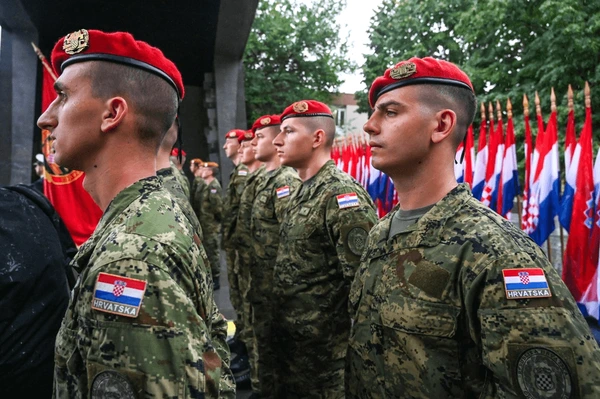
The Role of Croatia in Regional Conflicts and Border Wars

rec-dev.com – Croatia, a nation with a complex history in Southeast Europe, has played a significant role in regional conflicts and border wars. Its strategic location, diverse ethnic composition, and historical ties to neighboring countries have often placed it at the center of geopolitical tensions. This article examines Croatia’s involvement in regional conflicts, focusing on its role in the Yugoslav Wars and subsequent border disputes, highlighting the challenges and diplomatic efforts to maintain peace and stability in the region.

Croatia in the Yugoslav Wars

The disintegration of Yugoslavia in the early 1990s led to a series of conflicts known as the Yugoslav Wars. Croatia declared independence from Yugoslavia in 1991, sparking a war with the Yugoslav People’s Army (JNA) and Serb forces within Croatia. The conflict, known as the Croatian War of Independence, resulted in significant loss of life and displacement of people. Croatia’s struggle for sovereignty was marked by several key battles, including the Siege of Dubrovnik and the Battle of Vukovar, which became symbols of Croatian resistance.

The Role of Croatia in the Bosnian War

The Bosnian War, which erupted in 1992, further entangled Croatia in regional conflicts. Initially, Croatia supported Bosniak-Croat forces against Serb aggression. However, tensions between Bosniaks and Croats led to a brief conflict known as the Croat-Bosniak War in 1993-1994. The Washington Agreement, brokered by the United States, ended the hostilities and established the Federation of Bosnia and Herzegovina, a joint Bosniak-Croat entity within Bosnia and Herzegovina.

Border Disputes and Diplomatic Efforts

Following the end of the Yugoslav Wars, Croatia faced several border disputes with its neighbors. The most notable was the dispute with Slovenia over the Piran Bay and the Savudrija Peninsula. The two countries engaged in diplomatic negotiations and, in 2017, agreed to arbitration by the Permanent Court of Arbitration in The Hague. The arbitration ruling largely favored Slovenia, providing it with access to international waters in the Adriatic Sea.

Croatia’s Relations with Bosnia and Herzegovina and Serbia

Croatia’s relations with Bosnia and Herzegovina and Serbia have been marked by efforts to reconcile past conflicts and promote regional stability. Croatia has supported Bosnia and Herzegovina’s Euro-Atlantic integration and has worked to normalize relations with Serbia. The establishment of the Regional Cooperation Council (RCC) and Croatia’s membership in the European Union in 2013 have facilitated regional dialogue and cooperation.

Conclusion

Croatia’s role in regional conflicts and border wars has been shaped by its historical, ethnic, and geopolitical circumstances. From the Croatian War of Independence to the Bosnian War and subsequent border disputes, Croatia has navigated a challenging path toward peace and stability. Through diplomatic efforts and regional cooperation, Croatia continues to play a crucial role in fostering good relations with its neighbors and contributing to the security and prosperity of Southeast Europe.

World War I: The Road to the Great, Amazing War

rec-dev.com – The outbreak of World War I, often referred to as the Great War, was the culmination of decades of political, military, and economic tensions among European powers. This conflict, which lasted from 1914 to 1918, fundamentally changed the geopolitical landscape, leading to the rise and fall of empires, the death of millions, and the eventual stage for World War II. The road to this global conflict was paved with a complex web of alliances, imperial ambitions, and nationalistic fervor.

The Web of Alliances

One of the primary factors that led to the escalation of a regional conflict into a world war was the system of alliances that had developed in Europe by the early 20th century. The most significant of these were the Triple Entente, consisting of France, Russia, and the United Kingdom, and the Triple Alliance, comprising Germany, Austria-Hungary, and Italy. These alliances were formed as a means of providing security against perceived threats but ended up creating a situation where a conflict between any two powers could quickly draw in all the others.

Imperial Rivalries

The late 19th and early 20th centuries were marked by imperial expansion, with European powers competing for colonies in Africa, Asia, and the Pacific. This competition led to increased tensions, particularly between France and Germany over control of Morocco and between Austria-Hungary, Russia, and Serbia over influence in the Balkans. The Balkan region, with its mix of ethnic groups and competing nationalisms, became a tinderbox that would eventually ignite the Great War.

The Assassination of Archduke Franz Ferdinand

The immediate cause of World War I was the assassination of Archduke Franz Ferdinand of Austria-Hungary by Gavrilo Princip, a Bosnian Serb nationalist, on June 28, 1914. This event set off a chain reaction of ultimatums and mobilizations that led to Austria-Hungary declaring war on Serbia on July 28, 1914. Russia, in support of Serbia, began mobilizing its army, prompting Germany to declare war on Russia and then France. Germany’s invasion of Belgium, in an attempt to quickly defeat France, brought the United Kingdom into the war.

The War Widens

What began as a European conflict soon expanded to become a world war, drawing in countries from every continent. The Ottoman Empire and Bulgaria joined the Central Powers (Germany and Austria-Hungary), while Japan, Italy (which switched sides), and later the United States joined the Allies. The war was characterized by unprecedented levels of carnage, with new technologies like machine guns, tanks, and poison gas leading to massive casualties.

Conclusion

The road to World War I was complex and multifaceted, involving a mix of long-standing rivalries, shifting alliances, and immediate crises. The assassination of Archduke Franz Ferdinand served as the spark that ignited the powder keg of Europe, leading to a conflict that would forever change the course of world history. The lessons of World War I continue to resonate today, serving as a stark reminder of the dangers of nationalism, militarism, and the failure to resolve international disputes peacefully.