
Last Life in the Universe (2003): A Exploration of Solitude

rec-dev.com – “Last Life in the Universe,” directed by Pen-Ek Ratanaruang and released in 2003, is a mesmerizing Thai film that intertwines themes of loneliness, fate, and unexpected human connection. Renowned for its serene storytelling and stunning cinematography, the film offers a poignant reflection on life and the human condition, resonating deeply with audiences who appreciate contemplative cinema.

Plot Summary

The film follows Kenji, a reclusive Japanese librarian living in Bangkok, whose life is marked by routine and isolation. Kenji’s world is turned upside down when he encounters Noi, a free-spirited Thai woman dealing with her own personal turmoil. Their paths cross under tragic circumstances, leading to an unlikely bond that develops as they navigate the complexities of their lives. The narrative unfolds at a deliberate pace, allowing the audience to immerse themselves in the characters’ emotional landscapes and their evolving relationship.

Themes and Analysis

“Last Life in the Universe” delves into themes of solitude and the search for meaning in a seemingly indifferent world. It juxtaposes Kenji’s meticulous, controlled existence with Noi’s chaotic and unpredictable life, highlighting the transformative power of human connection. The film gently explores how moments of tragedy and serendipity can lead to profound personal change, offering a glimpse of hope amidst desolation.

Direction and Cinematography

Pen-Ek Ratanaruang’s direction is both subtle and powerful, creating an atmosphere of quiet introspection. The film’s cinematography, crafted by acclaimed cinematographer Christopher Doyle, is a visual masterpiece. Each frame is meticulously composed, capturing the beauty and melancholy of everyday life. The use of light and shadow, combined with the film’s muted color palette, enhances the sense of introspection and emotional depth.

Performances

The performances in “Last Life in the Universe” are understated yet deeply affecting. Tadanobu Asano delivers a remarkable portrayal of Kenji, embodying his character’s loneliness and inner turmoil with nuance and restraint. Sinitta Boonyasak is equally compelling as Noi, bringing warmth and complexity to her role. Their on-screen chemistry is palpable, adding authenticity to the film’s exploration of human connection.

Conclusion

“Last Life in the Universe” is a hauntingly beautiful film that resonates long after the credits roll. Its exploration of solitude, fate, and the unexpected bonds that shape our lives is both thought-provoking and emotionally engaging. With its stunning visual style and powerful performances, the film invites viewers to reflect on their own experiences of connection and isolation. For those who appreciate films that delve into the intricacies of the human experience, “Last Life in the Universe” is an unforgettable cinematic journey.
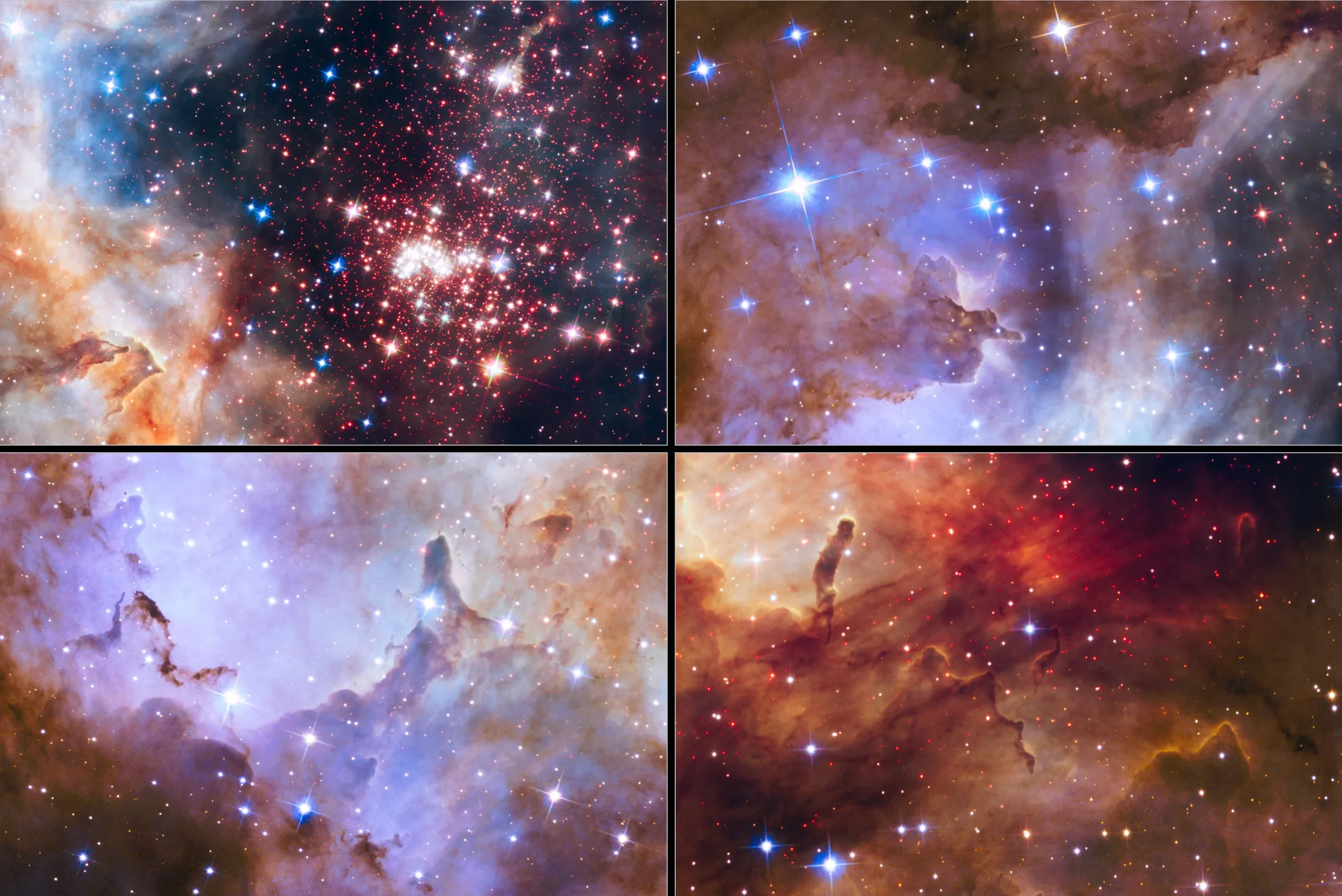
Unveiling the Universe: The Hubble Telescope

rec-dev.com – Since its launch in 1990, the Hubble Space Telescope has revolutionized our understanding of the universe. Named after the astronomer Edwin Hubble, who made significant contributions to the field of cosmology, the Hubble Telescope has become an icon of scientific exploration. Its unprecedented capabilities have allowed astronomers to peer deeper into space than ever before, capturing breathtaking images and providing invaluable data that have reshaped our view of the cosmos.

The Birth of a Cosmic Eye:
The Hubble Space Telescope was a joint project between NASA and the European Space Agency (ESA), designed to orbit the Earth and observe the universe in various wavelengths of light, including ultraviolet and infrared. Its journey began on April 24, 1990, when it was launched aboard the Space Shuttle Discovery. However, the initial excitement was soon dampened by a critical flaw in its primary mirror, which caused spherical aberration and significantly blurred the images. It wasn’t until December 1993, during the first of five servicing missions, that astronauts were able to install corrective optics, allowing Hubble to fulfill its potential.

Unveiling the Universe:
With its optical system corrected, Hubble began to deliver on its promise. It has since provided us with some of the most stunning and scientifically important images of the universe. From the deepest views of the far reaches of space, such as the Hubble Deep Field, to the detailed observations of planets within our own solar system, Hubble has been a beacon of discovery.

One of Hubble’s most significant contributions has been its role in determining the age and expansion rate of the universe. By observing distant supernovae, Hubble has helped to refine the understanding of the universe’s acceleration, leading to the acceptance of dark energy as a major component of the cosmos.

Hubble has also played a crucial role in the study of galaxies, their formation, and evolution. It has captured images of galaxies colliding, stars being born, and the intricate details of nebulae, providing insights into the life cycle of stars and the structure of the universe.

The telescope has not only focused on the vastness of space but has also turned its eye closer to home, observing the planets, moons, and asteroids within our solar system. Hubble’s images have revealed storms on Jupiter, the rings of Saturn, and the icy moons of the outer planets, contributing to our understanding of planetary science.

Legacy and Future:
The Hubble Space Telescope has been a treasure trove of scientific data, inspiring generations and leading to numerous discoveries that have pushed the boundaries of astrophysics. Its legacy is not just in the images it has captured but in the way it has fostered a sense of wonder about the universe and our place within it.

As Hubble continues to operate, its successor, the James Webb Space Telescope (JWST), is poised to carry on the exploration. Launched in December 2021, the JWST is designed to peer even further back in time and explore the earliest galaxies, the formation of stars, and the birth of planets.

Conclusion:
The Hubble Space Telescope has been an invaluable tool in the quest to understand the universe. Its contributions to astronomy and astrophysics are immeasurable, and its images have become emblematic of human curiosity and the pursuit of knowledge. As we look forward to the next generation of space telescopes, Hubble will remain a testament to what can be achieved when we reach for the stars. Its legacy will continue to inspire future explorations and discoveries, reminding us of the beauty and mystery that lies beyond our planet.