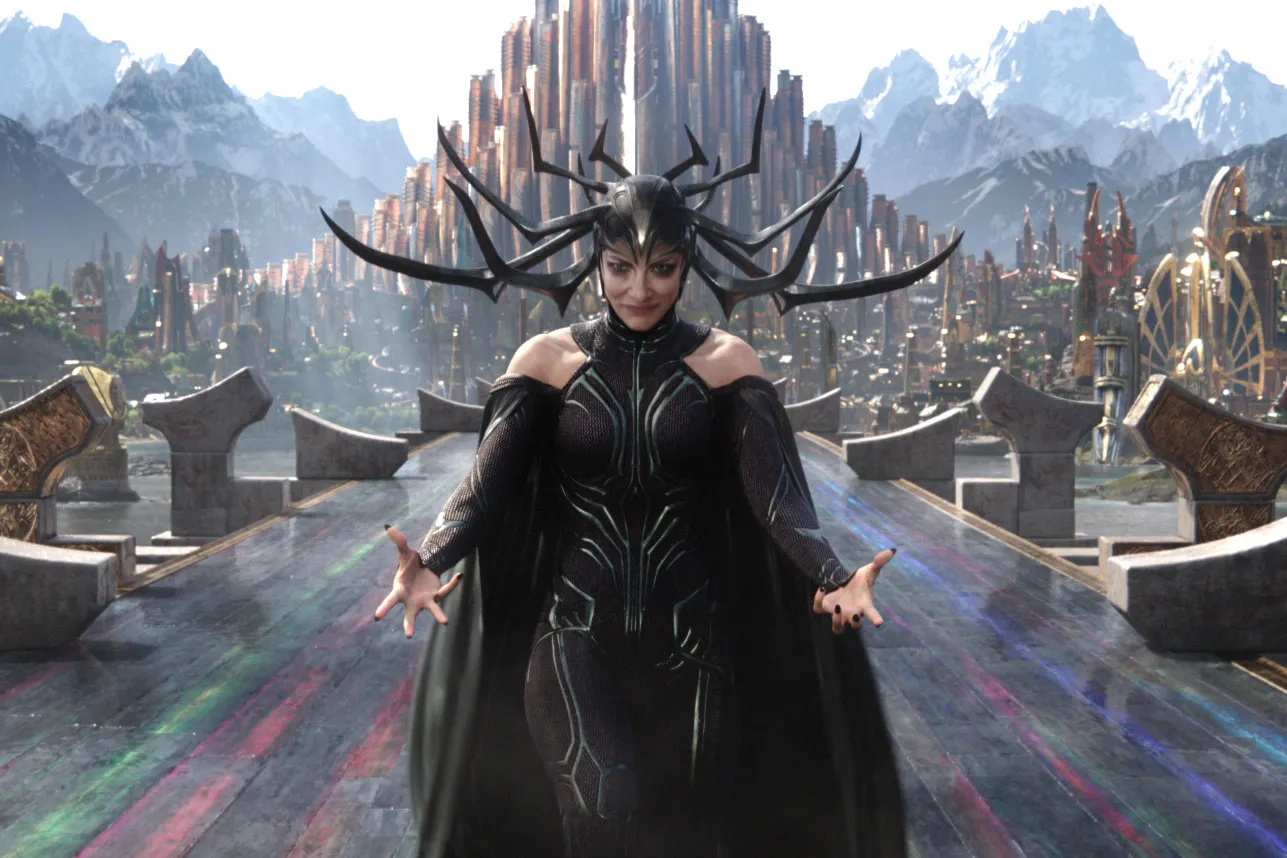
Hela: The Asgardian Goddess of Death

rec-dev.com – Hela, the Asgardian Goddess of Death, is one of the most formidable villains in the Marvel Universe. Known for her immense power and ruthless ambition, she has become a significant antagonist in both comic books and the Marvel Cinematic Universe (MCU). Her roots in Norse mythology add depth to her character, making her an intriguing figure in popular culture.

Origins and Character Development

Hela was first introduced in Marvel Comics by Stan Lee and Jack Kirby in “Journey into Mystery” #102, published in 1964. Inspired by the Norse goddess Hel, she is depicted as the daughter of Loki and the giantess Angrboða. In the MCU, however, her origins are slightly altered, portraying her as the firstborn of Odin, making her the sister of Thor and Loki.

Iconic Style and Powers

Hela’s appearance is striking, with her dark green armor and elaborate antler-like headdress. This design emphasizes her regal yet menacing nature. As the Goddess of Death, Hela possesses extraordinary powers, including superhuman strength, durability, and the ability to resurrect the dead. Her weapon of choice is the Nightsword, and she can conjure weapons at will, making her a formidable adversary.

The Psychology of Hela

Hela’s character explores themes of power, legacy, and vengeance. Driven by a desire to reclaim her rightful place as the ruler of Asgard, she is relentless in her quest for domination. Her motivations are rooted in a sense of betrayal and abandonment by her father, Odin, who imprisoned her to prevent her from fulfilling her destructive potential.

Cultural Impact

Hela’s portrayal by Cate Blanchett in the 2017 film “Thor: Ragnarok” brought her character to a wider audience, earning praise for her commanding performance. This adaptation highlighted Hela’s complexity, blending her ruthless nature with a charismatic presence. Her role in the MCU has solidified her status as one of Marvel’s most iconic villains.

Conclusion

Hela remains a captivating and enduring villain, embodying the dangers of unchecked ambition and the thirst for power. Her character serves as a reminder of the complexities of familial relationships and the consequences of past actions. As new stories continue to explore her character, Hela’s legacy as the Goddess of Death is sure to endure in the Marvel Universe.

Continuations & Their Application in Web Development

rec-dev.com – Continuations are a powerful programming construct that allows for explicit control over the flow of a program. By passing the remainder of a computation as a function, continuations enable a variety of advanced control structures and optimizations that can enhance both the correctness and efficiency of programs. This article explores how continuations can be used to improve the development of web applications, focusing on their role in enhancing both the user experience and the performance of web applications.

Understanding Continuations

A continuation is a function that represents the rest of the computation. It encapsulates the future of the program, allowing the current computation to be suspended and resumed at a later time. This concept is particularly useful in functional programming languages, where it can be used to implement complex control structures and to handle exceptions and other control flow operations elegantly.

Application in Web Development

Simplifying Web Application Development

Continuations can be used to simplify the development of web applications by providing a direct handle on future computation. This is particularly useful in the context of web servers, where continuations can be used to handle long-running requests and to maintain state across multiple requests.

For example, continuations can be used to implement non-blocking I/O operations, which can help improve the responsiveness of the web server and reduce latency . This can lead to a better user experience, as users do not have to wait for the server to respond to each request.

Enhancing User Experience

Continuations can also be used to enhance the user experience by providing a more seamless interaction with the web application. For example, continuations can be used to implement stateful web applications, where the state of the application is maintained across multiple requests.

This can be particularly useful in applications that require user interaction, such as online shopping carts or interactive forms, where the state of the application needs to be preserved across multiple requests.

Performance Optimization

Continuations can also be used to optimize the performance of web applications by allowing for more efficient control flow and resource management. For example, continuations can be used to implement asynchronous operations, which can help improve the performance of the web application by reducing the number of blocking operations.

This can lead to a more responsive web application, as users do not have to wait for the server to respond to each request.

Conclusion

Continuations are a powerful tool that can be used to enhance the development of web applications. By providing a direct handle on future computation, continuations allow for more efficient control flow and resource management, and can be used to implement complex control structures and optimizations. As such, continuations are a valuable tool for any web developer looking to improve the quality of their web applications.