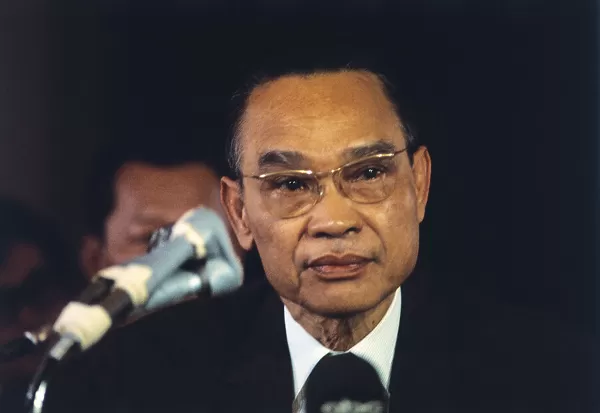
rec-dev.com – Prince Sisowath Sirik Matak, born in 1914, was a key royal figure and political leader in Cambodia during one of its most turbulent periods. A descendant of the Sisowath branch of the Cambodian royal family, he played a significant role in the country’s politics during the 1960s and 1970s. Despite his royal status, Sirik Matak was deeply involved in the political landscape of Cambodia, particularly during the critical years leading up to the Khmer Rouge regime. His legacy is marked by his commitment to his country’s sovereignty, his pivotal role in the royalist political movement, and his tragic end during the Khmer Rouge era.
Early Life and Education:
Prince Sisowath Sirik Matak was born into the royal family as a member of the Sisowath dynasty, one of the two prominent branches of Cambodia’s monarchy. His father, Prince Sisowath Monivong, was the king of Cambodia, and his mother was a prominent member of the royal court. Growing up in this environment, Sirik Matak was steeped in the traditions and responsibilities of the royal family.
He received a formal education in Cambodia, which was followed by studies in France. In Paris, Sirik Matak attended the prestigious École nationale d’administration, where he was trained in governance and political affairs. His time in France exposed him to European political ideas and governance practices, which would influence his later political career in Cambodia.
Political Involvement and Leadership:
In the years following Cambodia’s independence from French colonial rule in 1953, Prince Sisowath Sirik Matak became increasingly involved in the country’s political affairs. Cambodia, under the rule of King Norodom Sihanouk, was navigating the complexities of Cold War politics, trying to maintain neutrality while facing pressures from both the United States and communist forces in neighboring Vietnam.
Sirik Matak was an ardent royalist, and he supported King Sihanouk’s efforts to preserve Cambodia’s independence and neutrality in a region fraught with ideological conflict. He initially aligned with King Sihanouk’s government but became critical of some of the monarch’s policies, particularly as Cambodia moved closer to the influence of communist powers in the region.
By the late 1960s, tensions between Sihanouk and his political opponents, including Sirik Matak, began to escalate. Sirik Matak and other royalists who were critical of Sihanouk’s leadership became part of a broader political movement that sought to shift Cambodia’s political trajectory, especially in relation to its foreign policy.
Role in the Coup and the Fall of King Sihanouk:
In 1970, Prince Sisowath Sirik Matak was deeply involved in the coup that overthrew King Norodom Sihanouk. The coup, led by General Lon Nol, marked a significant turning point in Cambodian history. It ousted Sihanouk, who had been in power since Cambodia’s independence, and established a republican government. Sirik Matak was a strong supporter of the coup and played a prominent role in the new government, which was aligned with the United States and opposed to communist influence.
Despite the coup’s initial success, it triggered a series of political and military crises that would soon spiral out of control. The removal of King Sihanouk led to widespread unrest, and the new government faced significant opposition from both internal factions and external forces, including the North Vietnamese and the Khmer Rouge, a radical communist group led by Pol Pot.
Sirik Matak’s Role in the Lon Nol Government:
After the coup, Prince Sirik Matak served in various capacities within the new government. He was appointed as a high-ranking official and played a role in shaping the country’s policies during a period of extreme political instability. He supported Lon Nol’s government as it sought to align with the United States and fight against the growing influence of the Khmer Rouge and other communist insurgents.
The Lon Nol government, with Sirik Matak’s support, engaged in a brutal civil war against the Khmer Rouge, which was making significant territorial gains throughout the country. However, despite military aid from the United States, the Lon Nol regime was unable to stem the tide of communist insurgency, and the government began to crumble under the pressure of internal corruption and external attacks.
The Fall of Phnom Penh and the Khmer Rouge:
In April 1975, the Khmer Rouge forces, led by Pol Pot, captured Phnom Penh, the capital of Cambodia, effectively bringing an end to the Lon Nol government and the Cambodian Republic. Prince Sisowath Sirik Matak, along with many other political figures from the previous regime, was arrested by the Khmer Rouge. The radical communist forces that took control of Cambodia initiated one of the most brutal genocides in history, in which an estimated 1.7 million people lost their lives.
Sirik Matak was tragically executed by the Khmer Rouge shortly after their takeover. His death marked the end of an era for Cambodia’s royalist political movement and a personal tragedy for the Sisowath family. His sacrifice highlighted the tragic outcome for many of Cambodia’s political elite who opposed the Khmer Rouge and were targeted during their rise to power.
Legacy and Impact:
Prince Sisowath Sirik Matak’s life and political career are remembered for his commitment to the preservation of Cambodia’s sovereignty and his deep involvement in the country’s royalist politics. He was a loyal servant of the Cambodian monarchy, and his role in the 1970 coup that removed King Sihanouk from power demonstrated his belief that Cambodia needed to change its political direction in response to the growing influence of communism in Southeast Asia.
While his political involvement and opposition to King Sihanouk’s policies created divisions, Sirik Matak remained a staunch nationalist and royalist, deeply invested in the future of Cambodia. His tragic death at the hands of the Khmer Rouge solidified his status as a martyr for those who opposed the radical communist regime and a symbol of the devastating impact the Khmer Rouge had on Cambodia’s political elite.
Conclusion:
Prince Sisowath Sirik Matak was a significant figure in Cambodia’s political history during a period marked by change, conflict, and tragedy. His life was shaped by his commitment to Cambodia’s monarchy, his involvement in the political shifts of the 1970s, and his tragic death at the hands of the Khmer Rouge. Sirik Matak’s legacy endures as a symbol of Cambodia’s royalist past and the devastating consequences of the political turmoil that engulfed the country during the Vietnam War and the rise of the Khmer Rouge. His role in the coup of 1970, his support for the Lon Nol government, and his tragic end continue to be remembered as part of Cambodia’s painful and complex history.