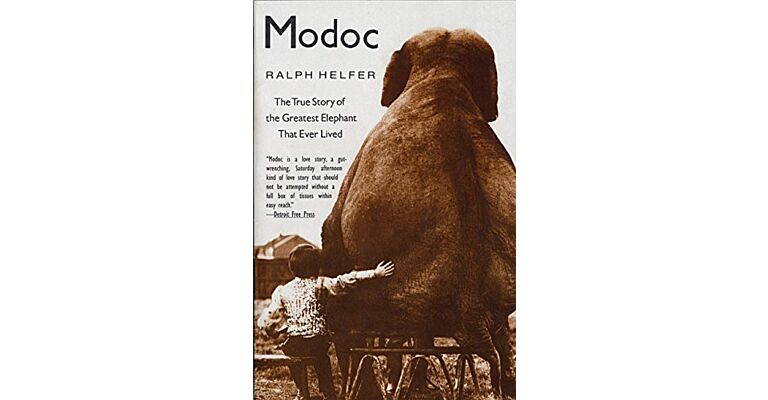
“Modoc: The True Story of the Greatest Elephant That Ever Lived”

rec-dev.com – “Modoc: The True Story of the Greatest Elephant That Ever Lived” is an extraordinary tale penned by Ralph Helfer, an acclaimed animal trainer and author. Published in 1997, this non-fiction narrative chronicles the incredible journey of an elephant named Modoc and her lifelong bond with a boy named Bram Gunterstein. Set against a backdrop that spans continents and decades, Helfer’s work is a touching tribute to the power of friendship and loyalty between humans and animals.

The Story of Modoc

The story begins in a small German village in the early 20th century, where Bram and Modoc are born on the same day and grow up together. Their bond becomes unbreakable as they journey through life’s many challenges. The narrative follows them from a circus in Europe to the exotic landscapes of India, and eventually to America, detailing their adventures and struggles.

Themes of Friendship and Perseverance

Central to the book are themes of friendship, perseverance, and the deep connection between humans and animals. Modoc and Bram’s relationship exemplifies unwavering loyalty and courage in the face of adversity. Helfer vividly portrays their shared experiences, emphasizing the emotional intelligence and sensitivity of elephants.

Historical and Cultural Context

Helfer’s narrative is enriched by detailed descriptions of the cultural and historical settings through which Modoc and Bram travel. From the vibrant circus life in Europe to the tumultuous years of war, and eventually to the diverse landscapes of India, each setting adds depth to their journey. Helfer’s background in animal training also lends authenticity to his portrayal of the circus and its evolution over time.

Reception and Impact

“Modoc” received acclaim for its heartwarming and adventurous storytelling. Readers are drawn to the inspiring tale of resilience and the profound bond between Bram and Modoc. Helfer’s ability to convey the emotional and psychological depth of animals has left a lasting impact on readers, prompting reflections on the ethical treatment and understanding of wildlife.

Conclusion

Ralph Helfer’s “Modoc: The True Story of the Greatest Elephant That Ever Lived” is a remarkable testament to the enduring bonds that can form between humans and animals. Through the incredible journey of Modoc and Bram, the book celebrates themes of love, loyalty, and resilience, making it a cherished narrative for animal lovers and adventurers alike.

True Crime Story of Stalking and Survival: The Killer’s Shadow

rec-dev.com – In the annals of true crime, few stories are as chilling as those involving stalkers—individuals who relentlessly pursue their victims, often blurring the lines between obsession and madness. “The Killer’s Shadow” is one such tale, a harrowing account of stalking and survival that unfolds like a suspenseful thriller, yet is all too real for the individuals caught in its grip.

The story begins with Jane Doe, a pseudonym for a woman whose life was forever altered by the attention of a man she barely knew. This man, whom we’ll refer to as John Smith, was not just any admirer; he was a predator, adept at blending into the shadows, watching, waiting, and planning. His infatuation with Jane was not born of love but of a dark, twisted desire to control and dominate.

Jane’s ordeal began with seemingly innocuous gestures—a message here, a phone call there. But as days turned into weeks, and weeks into months, the gestures became more sinister. John’s presence was everywhere—in the shadows of her street, in the reflections of her windows, in the echoes of her phone calls. He was the killer’s shadow, a constant, unshakeable presence that suffocated Jane’s sense of safety and security.

The stalking escalated. Jane’s home, once a sanctuary, became a prison. Every creak and groan of the house was a potential sign of John’s presence. Her phone was inundated with threatening messages, and her social media accounts were monitored and infiltrated. Jane’s life was dissected and analyzed by a man who knew no boundaries, a man who believed he was entitled to her every thought and movement.

But Jane was not a passive victim. In the face of unimaginable fear and pressure, she fought back. She sought the help of law enforcement, enlisted the support of friends and family, and armed herself with knowledge about her stalker. She learned to navigate the legal system, to document every encounter, and to use technology to her advantage. Jane’s journey is a testament to the resilience of the human spirit, a reminder that even in the darkest of times, there is a path to survival.

The climax of “The Killer’s Shadow” is both shocking and inevitable. John’s obsession culminates in a confrontation that could have ended in tragedy. But thanks to Jane’s bravery and the intervention of law enforcement, John is apprehended, and Jane is finally free from his shadow.

“The Killer’s Shadow” is more than just a true crime story; it is a narrative of empowerment. It highlights the importance of recognizing the signs of stalking, the value of seeking help, and the strength required to stand up to a predator. Jane’s story is a stark reminder that while we may not always control the actions of others, we can control our responses to them.

In the aftermath of her ordeal, Jane has dedicated herself to raising awareness about stalking and its impact on victims. She speaks openly about her experiences, hoping to provide comfort and guidance to others who may find themselves in the shadow of a stalker. Jane’s message is clear: no one deserves to live in fear, and with the right support and resources, it is possible to emerge from the shadow of a predator stronger and more resilient.

“The Killer’s Shadow” is a story of terror, resilience, and ultimately, survival. It serves as a stark reminder of the dangers that lurk in the shadows and the importance of standing together against those who seek to do harm. Jane’s journey is a beacon of hope for all who have faced the darkness, a testament to the enduring strength of the human spirit.