The British Model and Mental Health Advocate: Adwoa Aboah

rec-dev.com – In the world of fashion, where the spotlight often shines on physical beauty and the latest trends, Adwoa Aboah stands out not just for her striking looks and successful modeling career but also for her powerful advocacy for mental health. Born in London to a Ghanaian father and an English mother, Aboah has become a beacon of hope and a voice for those struggling with mental health issues. Her journey from a successful model to a prominent mental health advocate is both inspiring and impactful.

The Rise of a Model

Adwoa Aboah’s rise in the modeling world was meteoric. With her unique features and undeniable charisma, she quickly caught the attention of the fashion industry. Her career took off when she was featured on the cover of British Vogue in 2017, a milestone that marked her as one of the most sought-after models of her generation. Aboah’s work with top designers and her appearances in major fashion campaigns have solidified her status in the industry.

A Personal Struggle

Behind the glamorous facade of the fashion world, Aboah was battling her own demons. She struggled with depression and an eating disorder, experiences that she has been open about sharing. Her vulnerability and willingness to discuss her mental health journey have resonated with many, highlighting the importance of addressing these issues within the industry and beyond.

Advocacy and Gurls Talk

Aboah’s advocacy for mental health is not just about sharing her personal story. She has taken concrete steps to support others going through similar struggles. In 2016, she founded Gurls Talk, an online community that provides a platform for young women to discuss issues related to mental health, identity, and self-esteem. Gurls Talk has grown into a powerful movement, offering support and fostering a sense of community among its members.

Breaking Barriers

Adwoa Aboah’s work as a mental health advocate has helped break down barriers in the fashion industry. She has been instrumental in initiating conversations about the impact of the industry on mental health and the need for greater support and resources for those working within it. Her efforts have not only raised awareness but have also inspired others to speak out and seek help.

The Future of Mental Health Advocacy

As Adwoa Aboah continues to navigate her career and her advocacy work, she remains a powerful force for change. Her journey has shown that it is possible to thrive in the fashion industry while also addressing its challenges. Aboah’s commitment to mental health advocacy is a testament to her strength and resilience, and her work with Gurls Talk is paving the way for a more inclusive and supportive environment for all.

Conclusion

Adwoa Aboah’s impact as a British model and mental health advocate is profound. Her journey from personal struggle to public advocate has inspired countless individuals and has brought much-needed attention to the importance of mental health, especially within the fashion industry. Aboah’s legacy is not just in the runway shows she has walked or the campaigns she has been a part of, but in the lives she has touched and the conversations she has started. As she continues to break barriers and challenge norms, Adwoa Aboah remains a beacon of hope and a powerful voice for change.
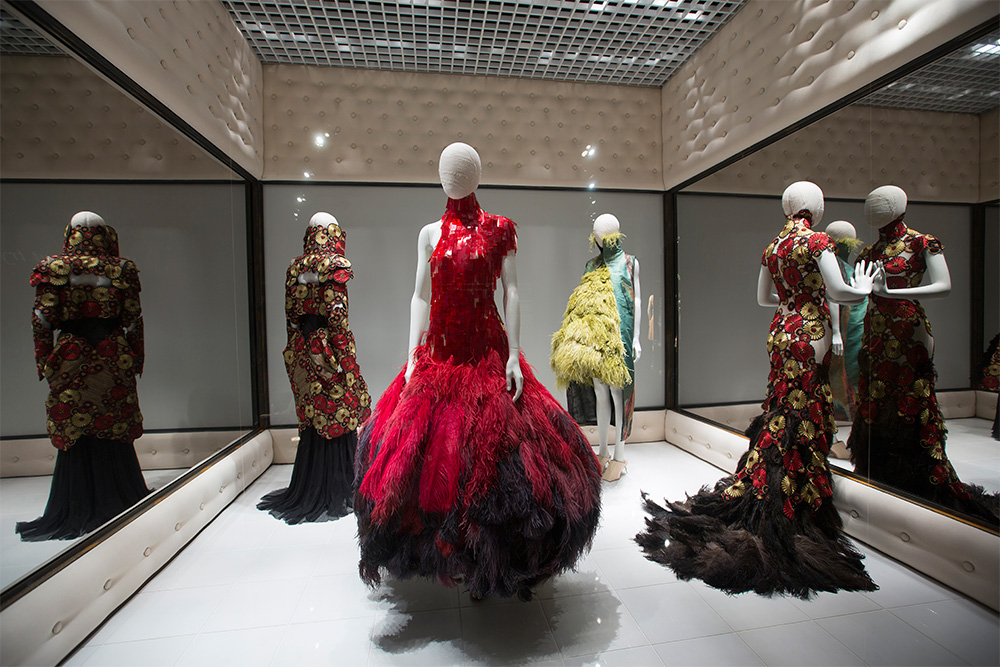
Alexander McQueen: The Savage Beauty of British Fashion

rec-dev.com – In the pantheon of British fashion, few names resonate with as much innovation, controversy, and sheer talent as that of Lee Alexander McQueen. Born in London in 1969, McQueen would go on to become one of the most influential designers of his generation, blending the lines between art, fashion, and performance. His untimely death in 2010 left a void in the industry, but his legacy lives on, encapsulated in the phrase “Savage Beauty,” which not only was the title of a major retrospective of his work at the Victoria and Albert Museum in London but also a fitting descriptor of his aesthetic and ethos.

McQueen’s journey into fashion was not a conventional one. He started his career in the tailoring department of Anderson & Sheppard on Savile Row, where he honed his craft before moving on to work for the fashion house of Gieves & Hawkes. It was during his tenure at these prestigious establishments that McQueen developed his meticulous attention to detail and mastery of tailoring, skills that would later become hallmarks of his own designs.

In 1992, McQueen graduated from Central Saint Martins with a master’s degree in fashion design. His graduate collection, titled “Jack the Ripper Stalks His Victims,” was a stark and visceral exploration of Victorian London, showcasing McQueen’s ability to blend historical references with a contemporary edge. This collection caught the eye of Isabella Blow, a renowned fashion editor and stylist, who would become his mentor and muse. Blow’s support was instrumental in launching McQueen’s career, and their relationship is one of the most storied in fashion history.

McQueen’s rise to fame was meteoric. He quickly established his eponymous label and began to push the boundaries of fashion with his avant-garde designs. His runway shows were theatrical spectacles, often more akin to performance art than traditional fashion presentations. From a model being sprayed with black paint in “The Hunger” to the hologram of a ghostly Kate Moss in “The Widows of Culloden,” McQueen’s shows were as much about the experience as the clothes themselves.

At the heart of McQueen’s work was a deep exploration of beauty and its darker, more complex facets. He was fascinated by the juxtaposition of the natural world and the human form, often incorporating elements of nature into his designs. His “Plato’s Atlantis” collection, for example, featured intricate prints of exotic marine life, a commentary on beauty and the beast, and the fragility of the natural world.

McQueen’s work was also deeply personal, often reflecting his own struggles and demons. His “Voss” collection, named after a character from the novel “Wise Children” by Angela Carter, was a haunting exploration of isolation and madness, culminating in a room filled with hundreds of moths. The collection was a reflection of McQueen’s own feelings of entrapment and despair.

Despite his avant-garde approach, McQueen was also a master of traditional tailoring. His ability to blend the classic with the cutting-edge was unparalleled, and his work for the British fashion house of Givenchy, where he served as creative director from 1996 to 2001, is a testament to his versatility. Under his tenure, Givenchy saw a resurgence of creativity and relevance, with McQueen bringing his unique vision to the venerable brand.

McQueen’s influence on the fashion industry is immeasurable. He was a pioneer of digital technology in fashion, using 3D printing and digital projectors to create garments that were as much about the future as they were about the past. His work has inspired a generation of designers, and his legacy continues to be celebrated through exhibitions, documentaries, and the ongoing success of his brand, which is now helmed by Sarah Burton.

Alexander McQueen’s “Savage Beauty” is not just a phrase; it is a manifesto, a declaration of the power of fashion to challenge, provoke, and inspire. In his too-short career, McQueen managed to redefine what fashion could be, pushing the boundaries of art, technology, and emotion. His work is a testament to the enduring power of creativity and the indelible mark one visionary can leave on the world.